Education
A classroom built for kids that COVID-19 left behind.
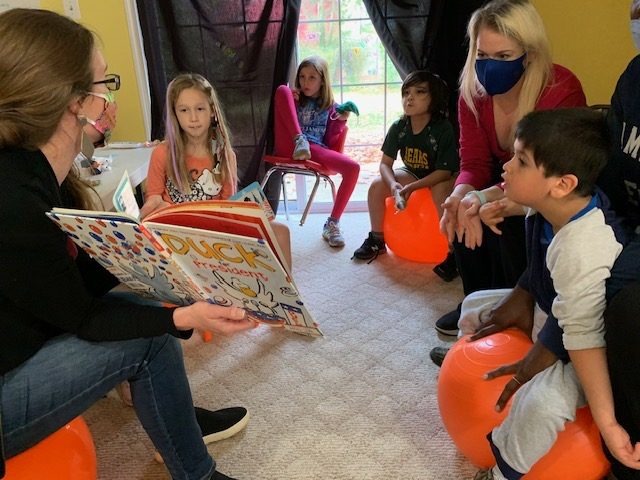
ALPS (Augmentative Learning Program of Study) was a program that Joey’s Foundation created during the COVID-19 pandemic when public schools were closed. It was a highly successful augmentative program for children with disabilities who needed extra help with a home-based academic curriculum.
Program structure
Small group, high support, real curriculum
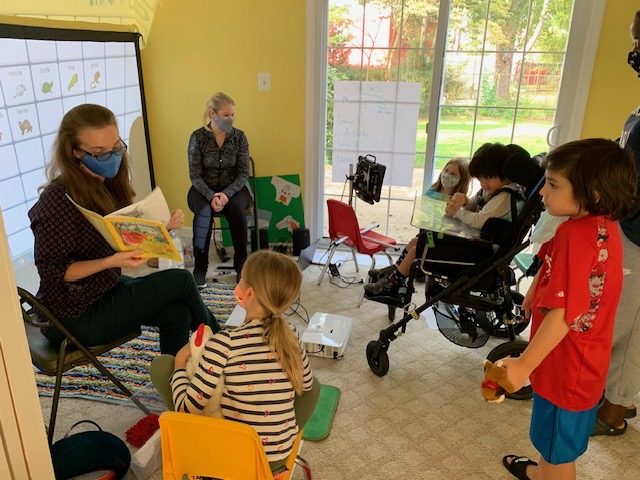
ALPS met three times a week for two-hour sessions, with extended Saturday classes. It was staffed by a special education teacher, an occupational therapist, and a speech and language pathologist, supplemented by volunteers — a ratio built for students who need more than a screen and a worksheet.
The curriculum aligned to Virginia Standards of Learning and covered reading, mathematics, spelling, and science alongside goal-setting, problem-solving, social interaction, and teamwork — using materials like Right Start Math and the Pioneer Valley literacy series, matched to each student’s grade level.
At a glance
- 3 sessions weekly, 2 hours each, plus extended Saturday classes
- Special education teacher + occupational therapist + speech and language pathologist + volunteers
- Curriculum aligned to Virginia Standards of Learning
- Reading, math, spelling, science, and social skills
Results
Every student progressed — and stayed safe doing it
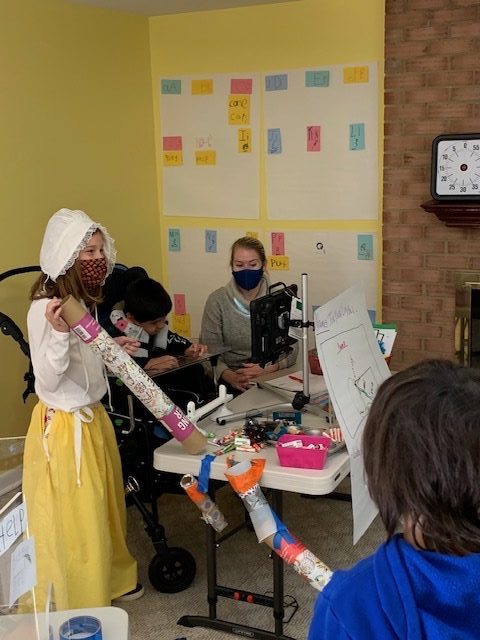
All students progressed, from pre-testing in September through post-testing at the end of the first semester in December, on reading proficiency, mental processes to solve math word problems, goal-setting, and interactions with others.
— ALPS first-semester outcomes
The program held to strict COVID protocols throughout — zero infections among participants — while building real peer cohesion among students with disabilities. As the Foundation puts it, these students didn’t just survive the pandemic; they thrived.
Resources
Notes from therapy sessions and the classroom.
Posts from Joey’s teachers and therapists, from 2017 to today. Filter by topic below.
-
BFit power based exercise program
A Foundation-sponsored adaptive exercise program at MedStar National Rehabilitation Hospital builds strength and power for children 5–21 with neuromuscular conditions, with peer support for families along the way.
-
Accepting Change
Ann-Bailey looks back on four and a half years of teaching Joey, from shaking a maraca along to Pete the Cat to reading sentences and counting money, as her family moves to the Blue Ridge mountains.
-
Be Kind and Silly – Our Students’ Inclusive Message
Third graders in the inclusive classroom wrote their own comedic retelling of Stone Soup, complete with the “Carrot Brothers” and the “Chugga Chugga Choo Choo family.”
-
Learning the Coins (and about each other)
Inclusive pod sessions used coin identification and money-counting exercises, differentiated across grade levels, to teach math and build peer connection at the same time.
-
Creating Units for Our Inclusive Group
How the teaching team plans instructional units around shared community concepts, while differentiating for a wide range of learner needs in one classroom.
-
When Collaboration Makes Us Stronger
A Thanksgiving sewing project was adapted with plastic needles and burlap for every student, not just Joey, showing how shared supports can strengthen the whole group.
-
Emotional Regulation and Empathy in Our Inclusive Setting
When a classmate melts down during math group, Joey reaches out to comfort her: a small moment of the empathy and friendship inclusive settings can build.
-
The Benefits of Our Inclusive Pod
A teacher who is also a parent describes what her own daughters gained from learning alongside Joey in the ALPS pod: patience, friendship, empathy, and academic growth.
-
Inclusive Guided Reading
Jan Richardson-style guided reading, adapted so first graders who do and don’t use AAC devices can do word work, read, and show comprehension together.
-
Happy Halloween!
The pod’s socially distanced trick-or-treat problem became a simple-machines project, with Joey working on fine-motor and communication goals while sending candy down a chute.
-
Introducing the ALPS Players – and Our First Readers’ Theater Performance!
Students wrote, costumed, and performed their own Little Red Hen readers’ theater, written so that AAC users could take starring roles.
-
More Problem Solving – Determining the best physical setup for all learners
Rearranging seating, lighting, and adult support so Joey can see both his device and his classmates during group lessons.
-
Diving Into Problem Solving – Honoring Wait Time in All Settings
Teaching the whole pod to honor a one-minute wait, with a sand timer and a visual cue, so AAC users have time to find their words in a group.
-
Collaboration as the Key
How the special educator, speech pathologist, and a special education professor plan the inclusive pod together, because “the answer is in the room.”
-
Inclusive Augmented Learning Pod: Reflections on Day 2
Third graders write Joey into the lead role of their play, and every student tries his eye-gaze device to feel how much work each word takes.
-
Opening the Doors of Our Augmented Learning Program Pod
The inclusive AAC pod opens in September 2020, organized around one year-long question: what is community?
-
Starting an inclusive AAC Pod!
Why the Foundation launched an after-school pod bringing AAC users and their typically developing peers together during virtual school.
-
Another Great Wordless Picture Book
The wordless book Wonder Bear turns out to connect with Joey, giving him plenty to describe and comment on with his device.
-
What Does the Data Say?
A month after returning to in-person sessions, a look at Joey’s eye-gaze data and how it compares with how things feel.
-
Adapting Grade Level Work
Adapting the district’s kindergarten summer packet so Joey can do the same work as every other student.
-
Measuring Reading Comprehension
Ways to tell whether Joey is reading and understanding when he can’t read aloud, such as matching sentences to pictures and building sentences.
-
This Book Is Magic (Great Read Aloud Recommendation!)
This Book Is Magic asks readers to tap, wave, and say magic words, creating natural back-and-forth communication.
-
Exploring Chapter Books
Moving to simple chapter books like Mercy Watson to match what other rising first graders are reading, with comprehension questions along the way.
-
Honoring Total Communication
Why signs, gestures, and choices offered in two hands count alongside the eye-gaze device, especially when Joey is out of his chair.
-
Back in Person!
After four months apart, Joey and Ann-Bailey meet in person again and find he has kept his high-frequency words and device skills.
-
The Day You Begin: Another great book for all types of diversity
Jacqueline Woodson’s The Day You Begin opens a conversation about difference and belonging in a virtual read-aloud group.
-
Learning sign language
Joey learned sign language to support self-regulation and communication during therapy. Small signs like “more,” “all done,” and “help” gave him a way to signal frustration.
-
Homemade “rescue basket”
A homemade “rescue basket” activity had Joey practicing alternating left/right grasping and release by pulling a ribbon, with therapy built from things found around the house.
-
Different body positions
Different body positions, including tall-kneeling on a stability ball, were used to strengthen Joey’s core muscles and build postural endurance.
-
Home-based activities
Home-based activities using suction-cup toys and a handmade box helped develop Joey’s grasping and hand-eye coordination during telehealth sessions.
-
Introducing telehealth therapy
Introducing telehealth therapy: how occupational therapy adapted to remote delivery over video platforms like Google Meet during COVID-19.
-
Don’t forget to include all your learners in your important read-alouds
Using Jacqueline Woodson’s The Other Side to talk about discrimination and racism with AAC users, not only with their speaking peers.
-
What About Next School Year?
As schools plan to reopen, a proposal for small in-person groups combining inclusive instruction with communication support.
-
To succeed with AAC we need a strong foundation
An iceberg picture of what AAC success rests on: inclusion, practice, and a team that believes in the student.
-
Using Wordless Shorts to Inspire Language
Short wordless animated films, paused and replayed, give natural chances to model and draw out language on the device.
-
Language is about Connection
A lesson from an AAC webinar: if teaching communication isn’t fun and connected, it isn’t working.
-
Wait Time Over Zoom
Why wait time matters even more online, where lag and fewer body-language cues make it harder to give.
-
Helping Kids Identify Their Feelings With Books About Waiting
Picture books about waiting help children name the restless feelings of quarantine and uncertainty.
-
Resources During COVID-19 Shut Down
A short roundup of resources for AAC users during the shutdown, including Proloquo2Go materials for talking about the coronavirus.
-
Accessing Online Resources with AAC
Using Pioneer Valley’s free Digital Reader to keep leveled reading going online during quarantine.
-
AAC Everywhere
Why AAC should be understood everywhere, not only by the few people trained on a particular device.
-
Thoughts on COVID-19
Thoughts on the shutdown, missing Joey, and how hard sudden change is for children.
-
Sibling Love
Joey’s older brother and Ann-Bailey’s daughter join a session just before the shutdown, and his brother understands Joey in ways no one else does.
-
Getting Joey Reading
Joey’s strong visual memory for sight words raises the next question: how to move from recognizing words to reading with understanding.
-
Measuring Joey’s Progress
How to measure what Joey knows academically, rather than just how well he uses his AAC device.
-
Continuing to Presume Competence and Looking Beyond Behaviors
When Joey rapid-fires words without waiting for an answer, looking past the behavior for what he is trying to say.
-
It’s Good to be Six!
Joey turns six, and a former first grade teacher reflects on what six-year-olds are like and how Joey fits right in.
-
The Importance of Honoring Voice
A day when the eye-gaze device stops working shows how fragile Joey’s voice is, and why low-tech backups matter.
-
Sharing Joey’s Story
Presenting research on Joey’s progress at the Council for Exceptional Children’s DADD conference.
-
Knock Knock! Discovering the beauty of telling jokes on the AAC
Knock-knock jokes on the device turn out to be great practice in back-and-forth conversation.
-
Who Reads? Creating new routines for learning new skills
Building a new routine so Joey does more of the reading himself, even when he tries to negotiate his way out of it.
-
When Ideas Don’t Work…
A favorite card game, Sleeping Queens, falls flat with Joey, and what that teaches about changing plans.
-
Analyzing Data and Making Decisions
Reviewing a year of Joey’s communication data ahead of two national conference presentations.
-
Winter Colds
A winter cold slows Joey down just as it slows the rest of us, a reminder to keep context in mind on hard days.
-
Exploring Similar Sounding Words – Looking Deeper into Components of Learning to Read on the AAC Device
Reading a Mo Willems book raises how “to,” “too,” and “two” work on the device, and what that means for learning to read.
-
Learning to Read on an AAC Device
Joey is doing well with predictable pattern books; the next challenge is decoding new words without reading aloud.
-
Art and Agency
Joey’s great-aunt turns the monster he made into a pair of gloves, a reminder that art is a form of communication too.
-
Joey’s Insights
Moments when Joey shares his own opinions, including pushing back on a fractured Red Riding Hood story.
-
When Presuming Competence Gets Hard
On days when Joey seems disconnected, holding on to the belief that he knows more than he can show.
-
Learning High Frequency Words
Starting kindergarten sight words with Joey after his quick success with letters and letter sounds.
-
Making a Monster (Art Project)
After reading Monster Trouble, an art project set up so Joey controls as much of his monster as he can.
-
Initiating vs Responding in Communication
The difference between Joey answering and Joey starting a conversation, and why “serve and return” matters.
-
Learning to Speak in Phrases
Supporting Joey’s move from single words to multi-word phrases on his device.
-
Listening Closely to Presume Competence
When Joey’s words seem random, listening closely reveals he is naming the books he wants to read.
-
Learning Prepositions
Joey says “under” to tell where his toy bee went, a lesson in noticing every attempt to communicate.
-
Another Great Book for Supporting AAC! – Ball
A nearly wordless book, Ball, gives Joey a full story to talk about on his eye-gaze device.
-
Supporting All Types of Communication: Chatting vs Responding
A dip in Joey’s device data turns out to reflect faster, more efficient navigation.
-
Connecting Communication with Grammar
Joey discovers the plural “-s” button and experiments with it, an early step toward grammar.
-
Getting Ready for Kindergarten!
Everything the team did to prepare Joey for kindergarten, posted on the day he starts.
-
It’s the Little Things – Communication and Motor Planning
Joey’s repeated near-miss selections reveal how much motor planning shapes communication on his device.
-
Feeling Brave with Pete the Cat
After a Pete the Cat school story, Joey says he feels “brave” about starting kindergarten.
-
The Pigeon (and Joey) Go To School!
Mo Willems’ The Pigeon Has to Go to School! helps Joey work through his worries about kindergarten.
-
Taking Steps Toward Kindergarten Success
Joey meets Ann-Bailey’s five-year-old daughter, a first step toward having classmates.
-
Using Good Dog, Carl to Support Language Development
The wordless classic Good Dog, Carl gives Joey a story to narrate and comment on with his device.
-
Connecting through the sensory system – Neuroplasticity Post 2
The second post on physical therapist Karen Pryor’s Foundation-hosted seminar: connecting with children through the sensory system.
-
Applying Simple Concepts of Neuroplasticity to Working with Joey – Post 1
Physical therapist Karen Pryor, author of Ten Fingers, Ten Toes, leads a Foundation-hosted workshop on neuroplasticity, and how its ideas apply to Joey.
-
Development, Big Numbers, and Kindergarten Expressions
Joey’s puzzling “100 oops” turns out to be a very kindergarten sense of humor.
-
Another Fun Book – I Need a Hug
A silly story about a porcupine looking for a hug gives Joey plenty to say.
-
Communicating His Needs
Joey starts asking for help on his device, in his own way rather than with the modeled phrase.
-
Where does inclusion fall in Joey’s journey?
Weighing what an appropriate kindergarten program looks like for a child working around grade level.
-
Looking Towards Kindergarten
Joey and Ann-Bailey’s daughter are both heading to kindergarten, with all the nerves that come with it.
-
Cookie Fiasco! Another great book for supporting core words
A Piggie and Gerald companion book full of core words to model on the device.
-
How do we truly assess student knowledge?
End-of-year assessments for Joey, and how to measure what he truly knows.
-
Age Appropriate Humor – (Giggling about poop)
Like every preschooler, Joey finds potty jokes hilarious, and that is a very good sign.
-
The Importance of Peers
Ten minutes with his seven-year-old cousin bring out some of Joey’s most focused communication.
-
Choosing a Language? What’s the best AAC system to use?
How families choose an AAC system, and why that choice is really the choice of a child’s language.
-
The Power of the Baby Animal Book
Never underestimate a cute baby animal: a simple animal book that gets Joey talking.
-
Another Silly Book For Working on Core Words
Oliver Jeffers’ Stuck, where everything ends up in a tree, is ideal for modeling core words.
-
Not Just a Box: Exploring Tinkering with Joey
Inspired by the book Not a Box, a tinkering session built around a cardboard box and Joey’s imagination.
-
The Clear Button: Thinking beyond just supporting words on the AAC device
The clear button is a reminder that communicating on a device involves more than the words themselves.
-
Counting Success!
Finding a way for Joey to count small sets, even though touching items in order is hard for him.
-
What’s Involved in Learning to Count?
Joey loves numbers but struggles to count objects, so this post unpacks the skills that counting requires.
-
How hard would you work to communicate?
A slowing device shows how much effort Joey puts into every word he says.
-
Joey’s Words are Back!
Joey’s repaired device comes home, and his comments, jokes, and requests come right back with it.
-
Joey’s communication patterns with and without his AAC device
Data on how Joey’s requests, social overtures, and comments changed while his device was away for repair.
-
AAC Theory, Practice, and Decision Making
Takeaways from a Council for Exceptional Children session on instructional decisions for students who use AAC.
-
It’s Not Easy Being a Bunny
An engaging read-aloud for four-to-six-year-olds, adapted with props so Joey can take part.
-
Making Books More Engaging
Without his device, Joey picks books he can interact with, using props, wands, and velcro pieces.
-
What Makes a Good Book for Joey?
After many, many readings of Room on the Broom, what makes a book truly engaging for Joey.
-
Giggles
Joey’s deliberately wrong answers on the number line show he knows exactly what he is doing.
-
Ninja, Ninja, Never Stop – Another great book for Core Words
A fast-moving book packed with core words, perfect for reading with a child who uses AAC.
-
Digging Deeper into Joey’s AAC Plateau
After a very communicative fall, a look at why Joey’s word counts leveled off.
-
Which witch?
A tired Joey perks up when he gets to choose the book, a lesson in choice and engagement.
-
Thinking Vocabulary and Theory of Mind
As Joey’s vocabulary grows, telling exploring from messaging, and adding words for thinking.
-
Love for Room on the Broom (a month after Halloween is over)
Why Room on the Broom makes an excellent read-aloud for Joey, long after Halloween.
-
Interested in Adapting Books? Here are my top 5 tips to increase engagement
Five practical tips for making adapted books, from donated copies to a good laminator.
-
Top Five Tips for Choosing Picture Books to Maximize Engagement
Five tips for choosing engaging picture books, drawn from a Council for Exceptional Children conference presentation.
-
Turning the Tables
Joey resists being prompted to use particular words, so naturalistic methods and total communication work better.
-
Remembering to Look Beyond the Data
When the numbers don’t capture everything Joey is communicating.
-
What Joey Teaches Us
Presenting research on Joey at the Pennsylvania Council for Exceptional Children conference, alongside his grandmother, a special education professor.
-
Reading “Press Here” with Joey
Hervé Tullet’s interactive Press Here earns a “Love. Love. Love.” from Joey.
-
Silly Joey Moments (that reveal so much about him)
Joey’s humor while reading The Gruffalo reveals how much he understands.
-
Tracking the Purpose Behind Joey’s Communication
Tracking why Joey communicates (requests, comments, jokes) during a Sandra Boynton read-aloud.
-
Reflecting and Questioning
New animal sounds on Joey’s device prompt questions about which words he really needs.
-
Another Great Book for Modeling Core Words on the AAC Device
Jeff Mack’s Look! uses just two words, both on Joey’s device, making it ideal for modeling.
-
Joey and Mo Willems Books
Joey asks for “silly reading” (Elephant and Piggie), and why those books work so well.
-
Looking for Competence
Strategies for presuming competence, from the Inclusive Schools Summer Leadership Institute in Syracuse.
-
LOVE: The power of having your own words
A new word, “love,” quickly becomes one of Joey’s favorites.
-
So how’s Joey doing with LAMP?
After a beach trip, Joey’s two-word answer shows how far he has come with LAMP.
-
Additional thoughts on Language Acquisition through Motor Planning (LAMP)
Beyond motor planning: the other reasons LAMP works for teaching communication.
-
Art Project Success! Using sticker-backed felt to give Joey independence in art
Sticker-backed felt gives Joey a mess-free way to make art more independently.
-
The Importance of Modeling
A Journal of Early Intervention study on adults modeling AAC for children with complex communication needs.
-
The Power of Being Able to Choose Your Words
New words on Joey’s device, and how quickly he puts them to use.
-
Preparing Harry the Dirty Dog to read with Joey
Preparing an adapted version of Harry the Dirty Dog to share with Joey.
-
Prompting Hierarchy for Augmentative and Alternative Communication
Understanding the types of prompts, paired with wait time, when supporting a child who uses AAC.
-
Model, Model, Model! The importance of strategic modeling with the AAC device
Strategic modeling on the device during a Curious George read-aloud.
-
Incorporating Math Skills into Storybook Read Alouds
Weaving counting and calendar math into storybook read-alouds.
-
How important is reciprocal communication?
Two words and a gesture show why back-and-forth communication matters so much.
-
Oops! Pounce! Quick! Run! Another great book for talking, playing, and learning!
An alphabet book with plenty of chances to model words on Joey’s device.
-
Making Time for Play: Part 4 in Play Series
Play series, part 4: how adults can support children’s play.
-
Developmental Stages of Play (Part 3 in the Play series)
Play series, part 3: the developmental stages of play, including symbolic play.
-
What is play, and why is it important?
Play series, part 1: what play is and what it means for Joey.
-
Increasing Gestural Communication
Joey’s gestures grew right along with his device use, contrary to a common fear about AAC.
-
The Power of Collaboration
Reading Seals on the Bus while his physical therapist supports Joey on a bench.
-
Reading ‘Going On a Leaf Hunt’ with Joey
A bright red leaf becomes a “fire engine” while reading Going On a Leaf Hunt.
-
Why Wait? How wait time presumes competence
How giving a child time to respond is itself a way of presuming competence.
-
Honoring Intent – Presuming Competency Part 2 of 3
Presuming competence, part 2: honoring what Joey means, even when his words don’t match.
-
Presuming Competency – Why is it important?
Presuming competence, part 1: why it matters and how to start.
-
Looking past behavior: The War on Want Part 2.
The ongoing standoff over the word “want,” and what lies behind the behavior.
-
Play, Asking Questions, and Searching for Answers
Watching Joey learn through play raises new questions for his teacher.
-
Reading Little Hoot with Joey
Joey becomes surprisingly engaged in Little Hoot, a story about an owl who just wants to sleep.
-
Teaching Calendar Skills
Introducing a preschool wall calendar, and Joey’s giggles over the number 14.
-
Using the book Mouse Paint with Joey
Choosing a book that keeps academic goals going while building on what gets Joey talking.
-
So what is this AAC thing you keep writing about?
A plain-language introduction to augmentative and alternative communication.
-
Buttons Come and Buttons Go
Joey starts finishing the last word of Pete the Cat’s mantra, and beams with pride.
-
Change of Plans: Reading Chicka-Chicka-Boom-Boom with Joey
When the lesson plan meets Joey’s own plan for the foam letters.
-
Serve and Return: Tuning in to Joey’s patterns of communication
Serve and Return is a term researchers and practitioners use to describe the back-and-forth communication we experience when we interact and respond to one another. It is essential in early development, and starts the first time your infant locks eyes…
-
I am three years old!
Joey presses the “I am three years old” button over and over, and what that repetition might mean.
-
Books and the AAC Device
Using books and interactive read-alouds to motivate Joey to use his new device.
-
Success
Mid-story, Joey opens the right page on his device by himself, a small moment of great success.
-
Communication
Communication is how we interact with the world, and Joey has much more to say than you might see.
-
Meet Joey
A brief introduction to Joey, and to the smile the whole Foundation is named for, in a way.