Innovation
Turning repetitive therapy into something a child wants to do.
In partnership with Dr. Amy Bastian at the Kennedy Krieger Institute, the Foundation funds engineers building equipment, clothing, and treatments that target muscle tone, balance, motor control, and speech in children with brain disorders.
From prototype to clinical trial
How one idea became a funded research tool
PediaCORE
Biomedical engineering students from Johns Hopkins University built PediaCORE, an interactive rehabilitation system that engages children (ages 2–14) in therapeutic movement through customizable video games. The team won acceptance into JHU FastForward U’s Spark Accelerator program.
ADAPT: Aiding Distanced and Accessible Physical Therapy
Building on the PediaCORE prototype, the team developed ADAPT — therapist-controlled game settings, automatic progress tracking, and real-time motion-capture analysis. Therapists reported that “patients enjoy the fun and interactive games, and the therapists report higher levels of active engagement than they normally see.”
Funding access to the trial
Joey’s Foundation began funding travel for research participants, removing a real barrier to participation in clinical trials studying how PediaCORE training dosage compares to traditional physical therapy.
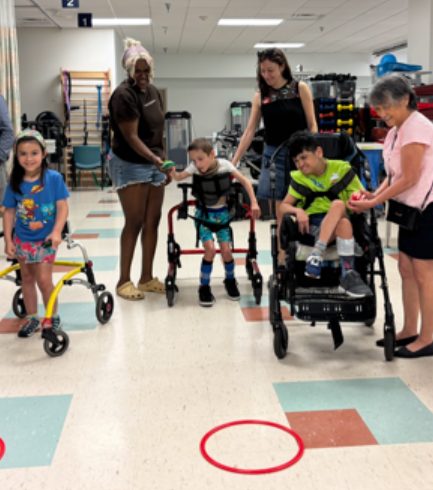
BFit: power-based exercise program
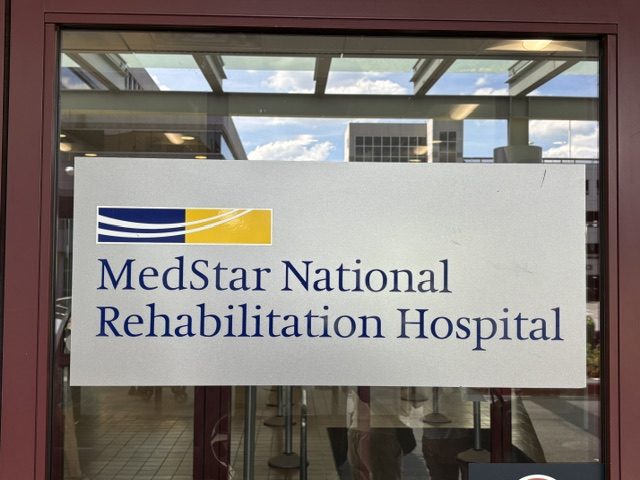
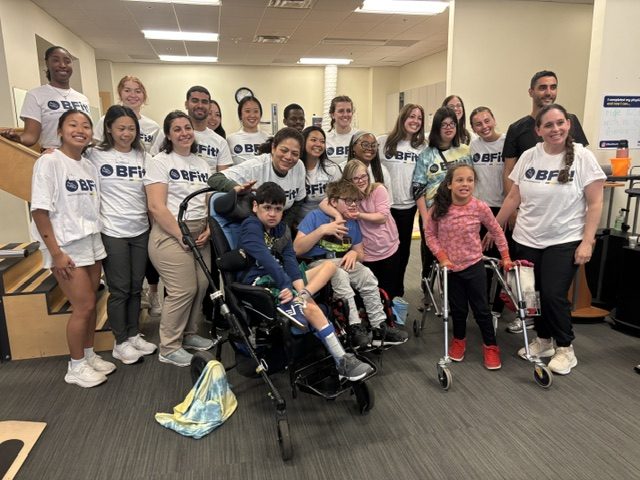
BFit, in partnership with the National Rehabilitation Hospital in Washington, D.C., was so successful during its first two years that the program was expanded to two different locations and three sessions per year.
Two locations
The program outgrew a single site in its first two years.
Three sessions a year
Cohorts run on a repeating cycle rather than one-off classes.
MedStar NRH
Run in partnership with the National Rehabilitation Hospital, Washington, D.C.
Why it matters
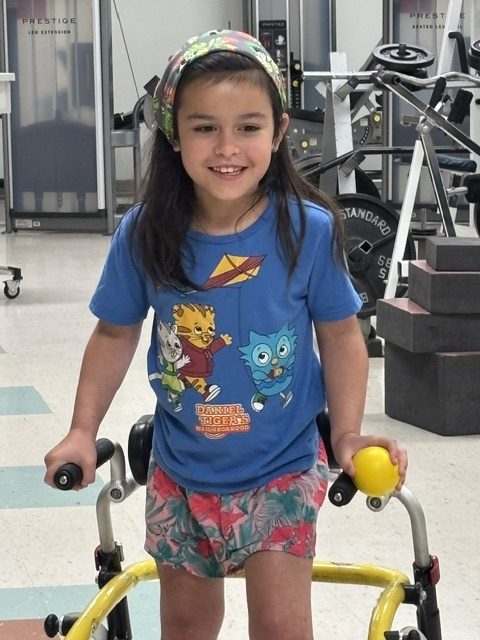
Physical therapy for a young brain-injury patient is repetitive by necessity — the same small movement, dozens of times, session after session. PediaCORE and ADAPT don’t change what the body needs to do; they change what it feels like to do it, replacing rote repetition with a game a child is actually motivated to play. The Foundation funds that translation work — from a Johns Hopkins engineering studio to an actual clinical trial — including the everyday costs, like transportation, that determine whether a family can participate at all.